
Squamous epithelium is made of flat, thin cells with irregular boundaries.
Types of squamous epithelium
Squamous epithelium is divided into 2 types:
- Simple squamous epithelium
- Stratified squamous epithelium
Simple squamous epithelium
- Made up of a single layer of cells.
- It is also called pavement epithelium or tessellated epithelium.
- Mainly present in regions where diffusion occurs.
- The cells resemble floor tiles. The length and breadth of the cells are more than the thickness of the cells.
- Examples:
- Alveolar epithelium
- Parietal layer of Bowman’s capsule
- Capillary epithelium (endothelium)
- Coelomic epithelium (peritoneum)
- Pleural membrane (covering of lungs)
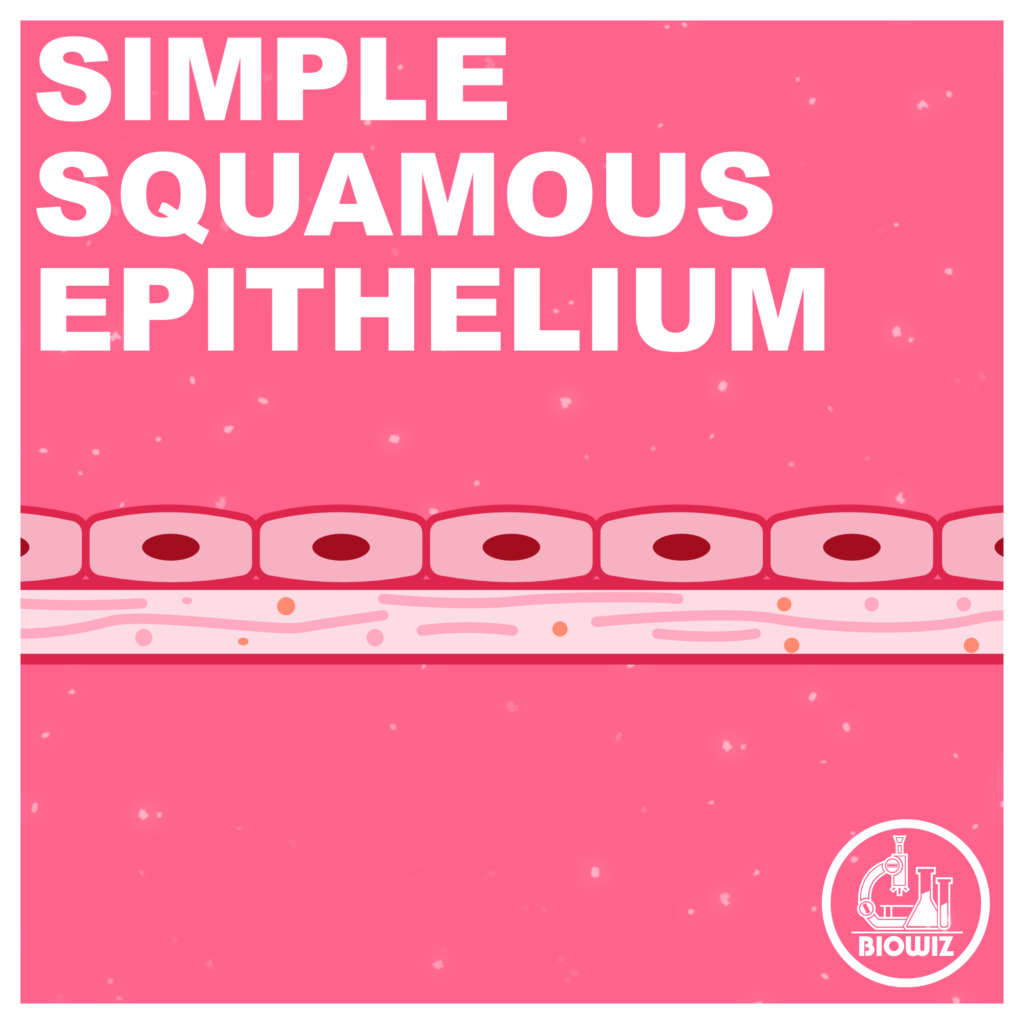
NCERT’s examples of simple squamous epithelium are the walls of blood vessels and the air sacs of lungs. Its job there is to form a thin diffusion boundary.
Stratified squamous epithelium
- Made up of multiple layers of cells.
- The cells of the top layer are squamous.
- Mainly present in regions where protection is required or where wear and tear is common.
- Examples:
- Lining of buccal cavity (cheek epithelium)
- Skin
- Pharynx
- Vaginal epithelium
- Conjunctiva
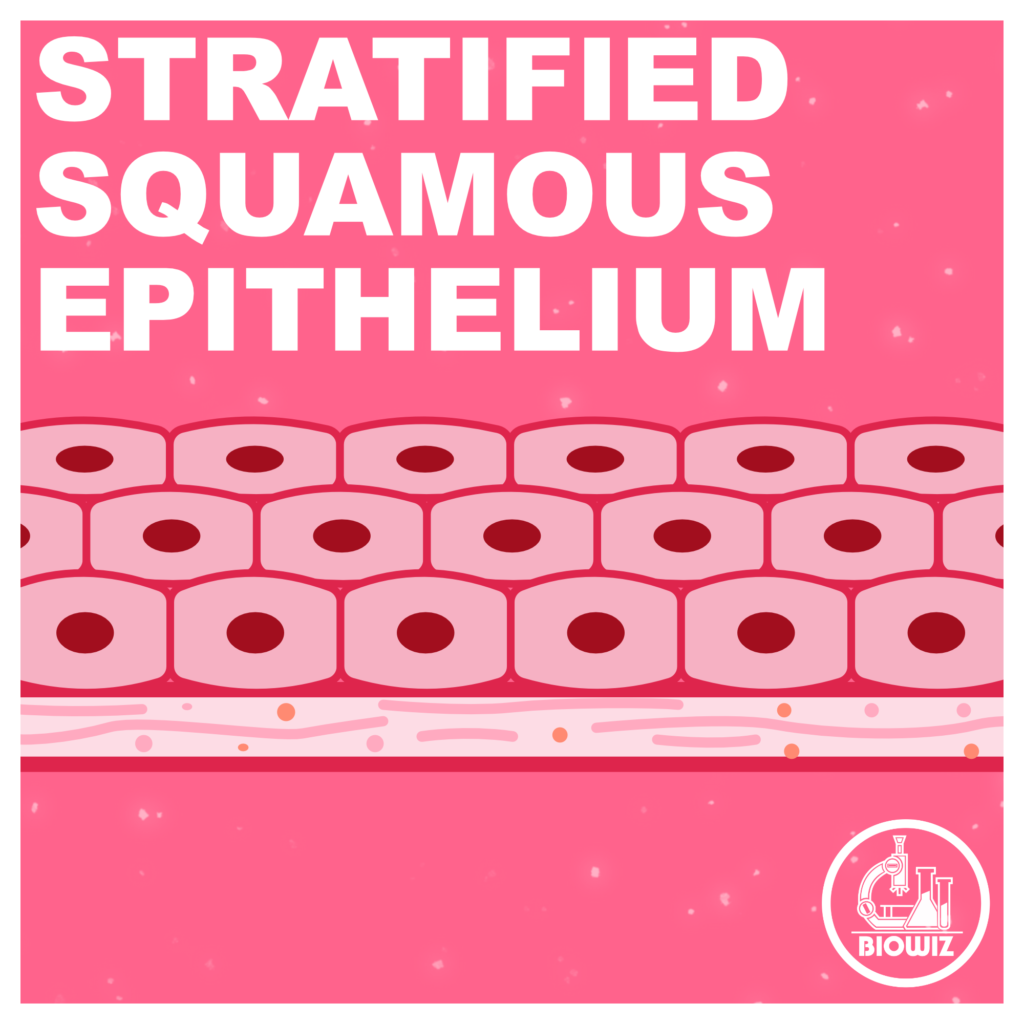
Stratified squamous epithelium is keratinised on dry surfaces like the skin, and non-keratinised on moist surfaces like the buccal cavity, pharynx and vagina. NCERT calls multi-layered epithelium compound epithelium; its main job is protection against chemical and mechanical stress.