
What are glands?
Glands are cells or groups of cells specialised for secretion. They are formed when some of the columnar or cuboidal cells of an epithelium become specialised to secrete substances, forming the glandular epithelium.
- Glands are epithelial in origin.
- Development of glands can occur from any of the 3 germ layers, i.e. ectoderm, mesoderm or endoderm.
- Glands can be divided into different types based on the number of cells, the mode of secretion and the site of release.
NCERT classifies glands in two ways. By number of cells: unicellular (goblet cells of the alimentary canal) and multicellular (salivary glands). By site of release: exocrine glands release mucus, saliva, earwax, oil, milk and digestive enzymes through ducts, while endocrine glands are ductless and release hormones directly into the fluid bathing the gland.
Types of glands (on the basis of secretion)
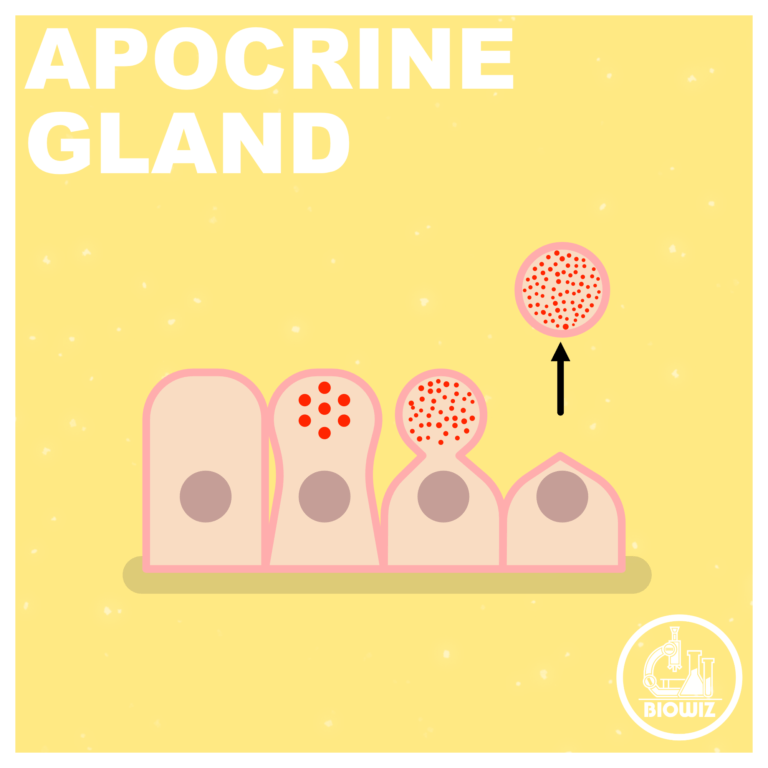
Apocrine glands
- The secretion first accumulates in the apical part of the cells and is later pinched off in the form of a vesicle.
- The size of the cell decreases due to secretion.
- The cell regrows and again accumulates the secretions.
- Examples – sweat glands of armpits and thighs, mammary glands.
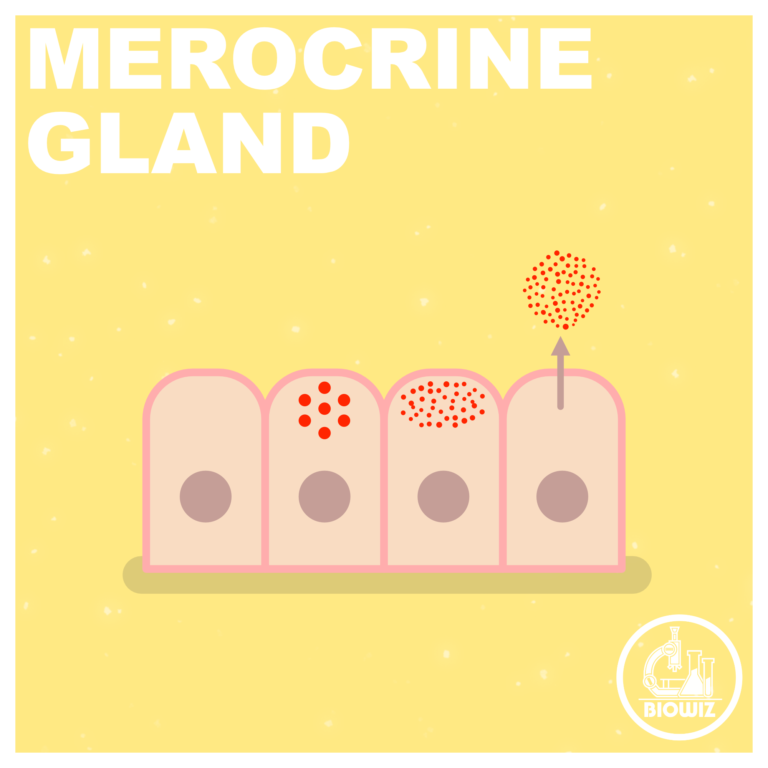
Merocrine glands
- The secretions are released out of the cell by exocytosis.
- The cells are not damaged during secretion.
- Merocrine glands are also called eccrine glands.
- Examples – salivary glands and sweat glands.
Holocrine glands
- The entire cell disintegrates and releases the secretion out.
- The secretions released are oily.
- Example – sebaceous glands.
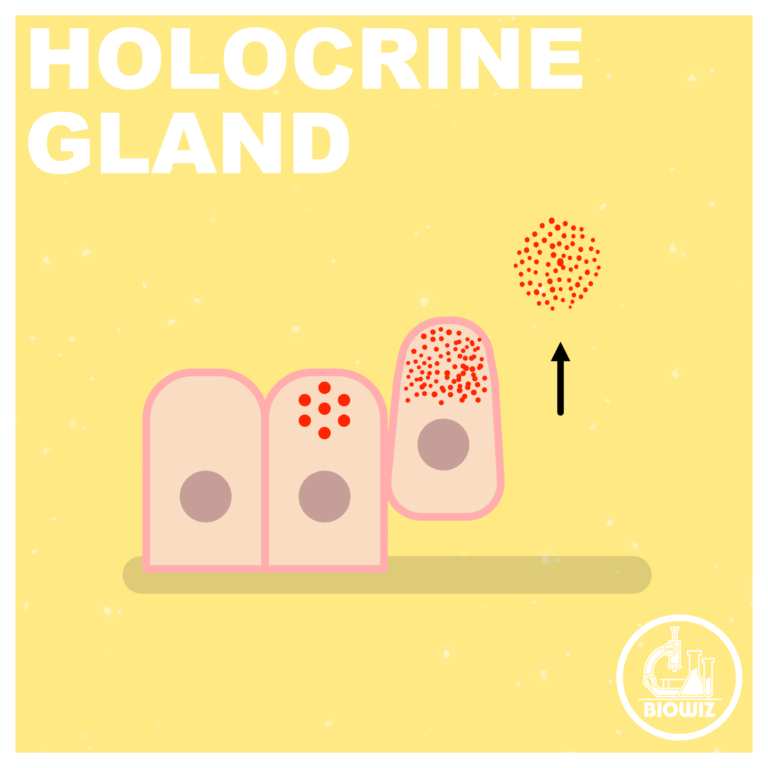
Remember them by how much of the cell is lost: merocrine – nothing is lost; apocrine – the apical part of the cell is lost; holocrine – the whole cell is lost.