
Columnar epithelium is made of tall, column-like cells and is mainly involved in secretion and absorption.
Important points
- The height of the cells is more than the length or the breadth.
- The cells appear column-like in shape.

Simple columnar epithelium
- Made up of a single layer of cells.
- The cells are elongated and column-like.
- An epithelial lining containing columnar epithelium is generally secretory or glandular.
- Examples:
- Lining of the gall bladder
- Lining of the stomach and intestines
In columnar epithelium, the nuclei are located at the base of the cells. Its free surface may bear microvilli (brush border) or cilia, giving the two specialised types below.
Ciliated columnar epithelium
- Bears cilia on the apical surface of the cell.
- The cilia beat in a synchronised manner with adjacent cells.
- Helps in the movement of substances over the surface of the epithelium.
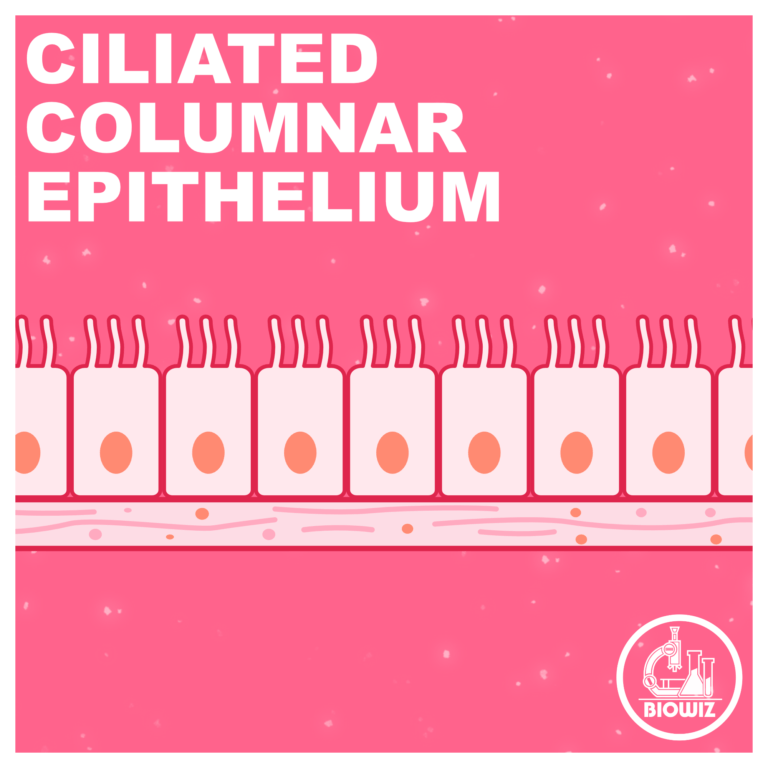
NCERT’s examples of ciliated epithelium are the inner surface of hollow organs like the bronchioles and the fallopian tubes, where the cilia move particles or mucus in a specific direction.
Brush bordered columnar epithelium
- Small cytoplasmic projections called microvilli are present.
- Microvilli increase the surface area for secretion and absorption.
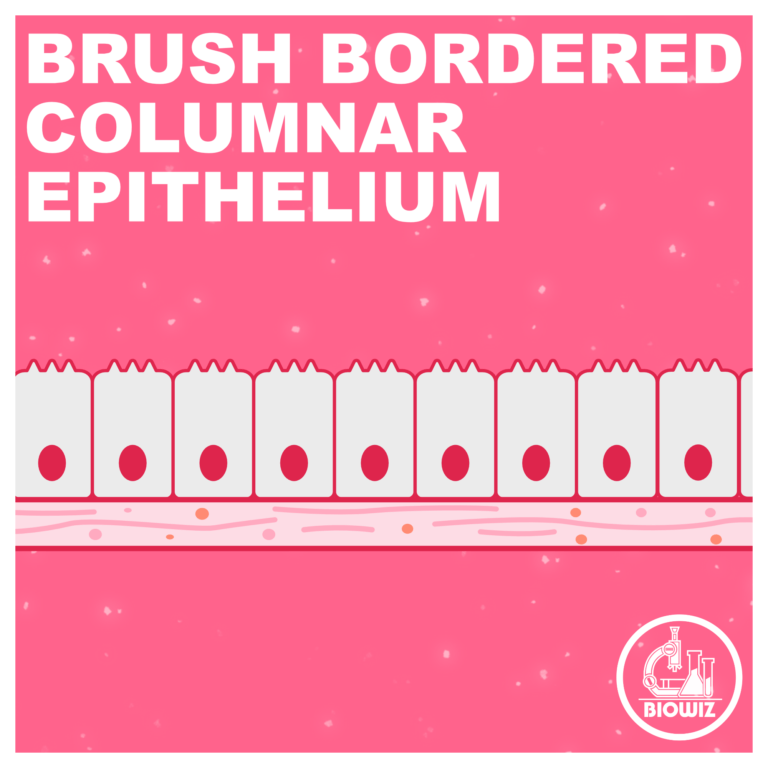
NCERT’s example of columnar epithelium with microvilli is the inner surface of the gut (intestine). Remember that the brush border of the PCT of the nephron is on cuboidal cells, not columnar. Read more in Cuboidal Epithelium and Squamous Epithelium.