Venation is the arrangement of veins and veinlets in the lamina of a leaf. In reticulate venation, the veinlets form a network (common in dicots). In parallel venation, the veins run parallel to each other (common in monocots).
Types of reticulate venation
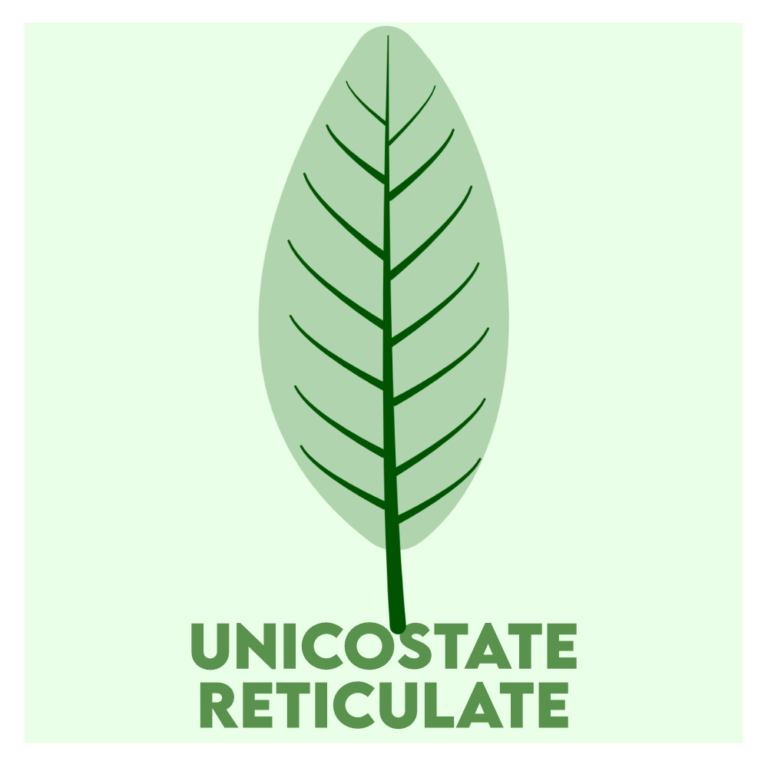
Unicostate or pinnate
The main fibrovascular supply traverses the length of the lamina from base to apex and forms the midrib or the prominent single costa. The midrib and the secondary branches resemble the general plan of a feather, hence called pinnate. Eg. Mango and Peepal.

Multicostate or palmate
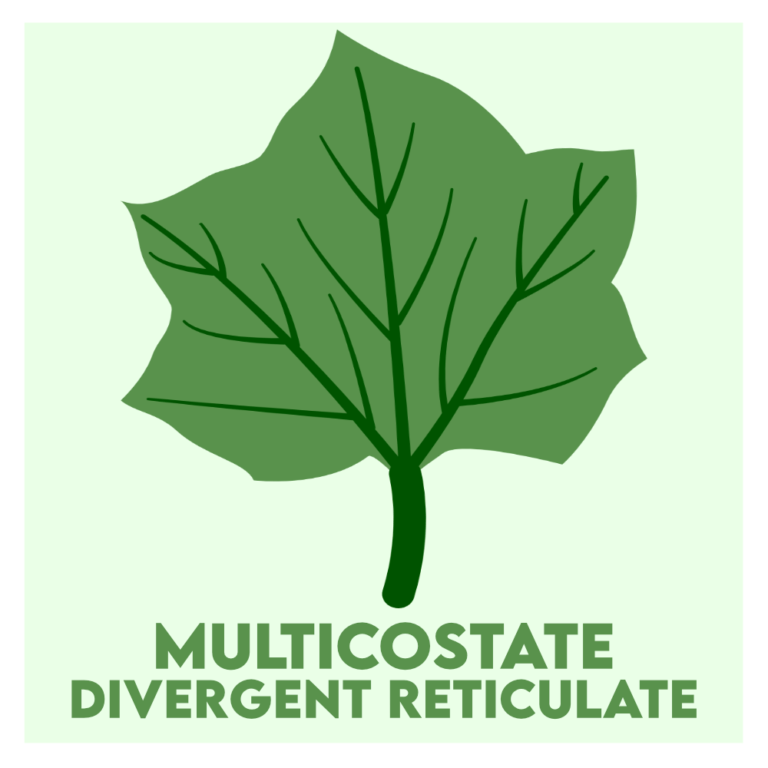
The main vascular supply, after reaching the base of the lamina, breaks up into a number of equally strong veins or costas. Thus, there is no midrib, and the costas spread out as the fingers from the palm of the hand, hence called palmate.
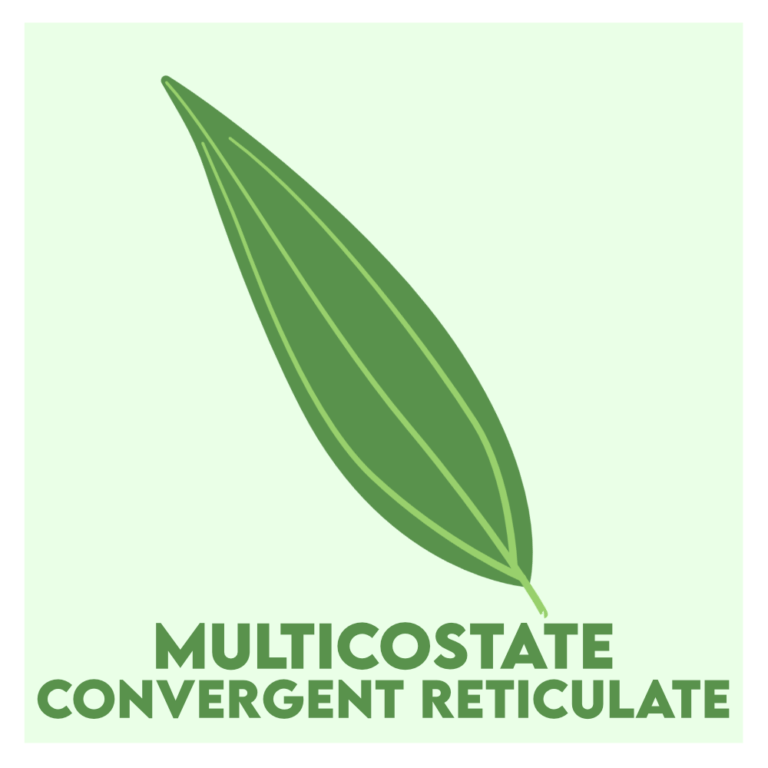
Multicostate reticulate venation can be further divided as:
- Convergent – when the prominent veins (costas), after spreading out from the base, again converge towards the tip of the lamina. Eg. Zizyphus.
- Divergent – when the prominent veins (costas) spread out farther and farther apart. Eg. Cucurbits and China rose.
Types of parallel venation
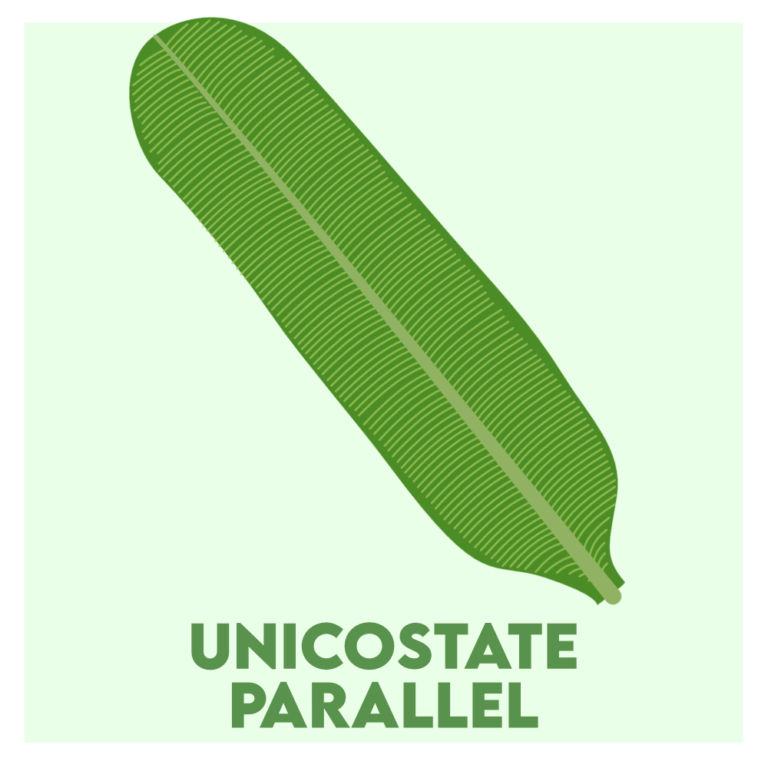
Unicostate or pinnate
The midrib (single prominent costa) runs from base to apex of the lamina and gives rise to parallel veins, which are joined by transverse veinlets which are again parallel to one another. Eg. Banana (Musa).
Multicostate or palmate
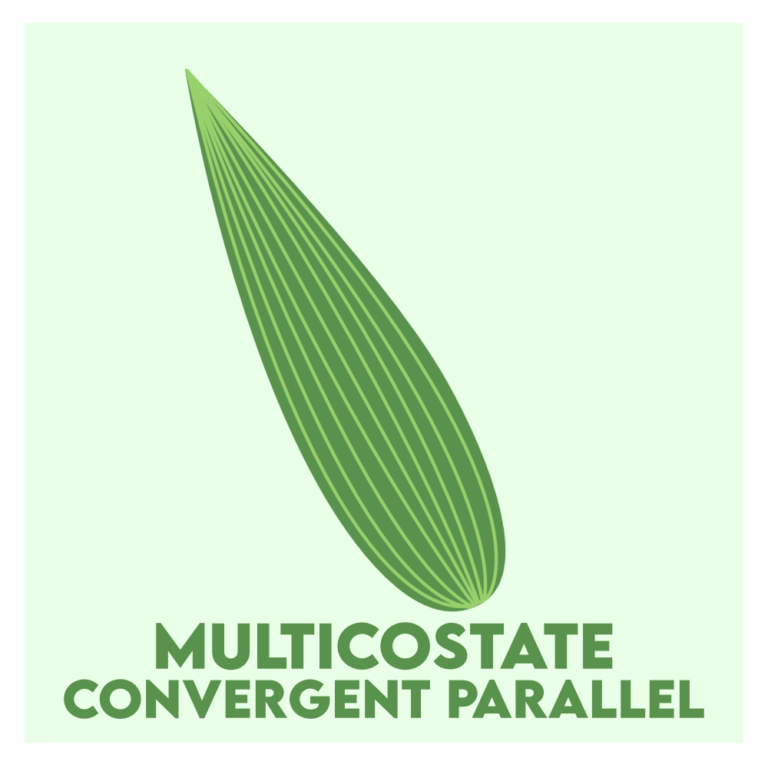
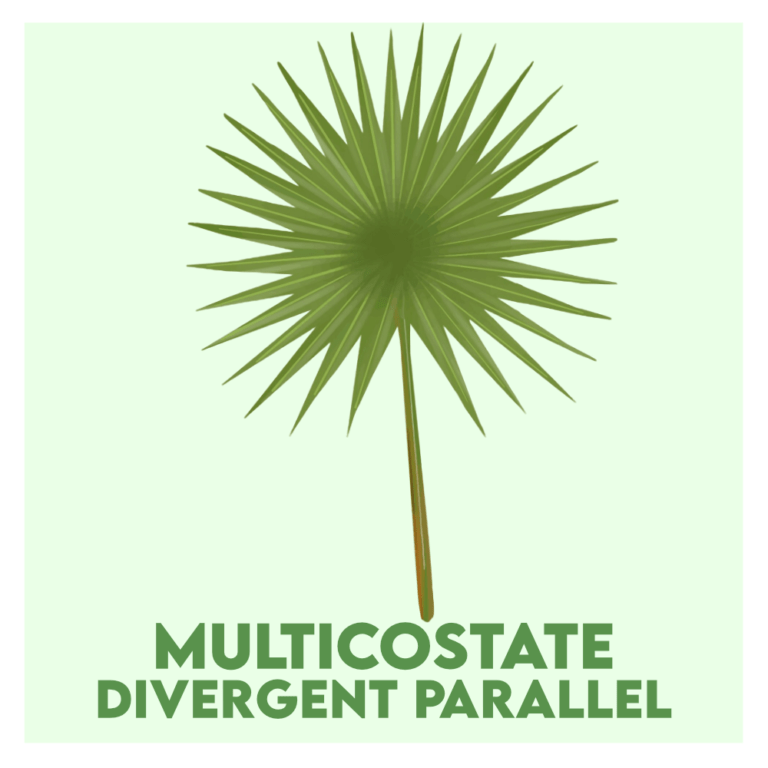
The main vascular supply, after reaching the base of the lamina, breaks up into a number of equally strong veins or costas, which can be:
- Convergent – Eg. Bamboo
- Divergent – Eg. Fan palm