
Important points
- The leaf is a green and dorsiventrally flat organ of the plant.
- The leaf arises at the nodes of the stem or its branches and grows laterally.
- The leaf is the main photosynthetic part in most plants.
- The leaf usually bears a bud in its axil, called the axillary bud.
Parts of leaf
The main parts of the leaf include:
- Leaf base
- Petiole
- Lamina
Leaf base
- Point of attachment of the leaf to the stem.
- In leguminous plants, the leaf base is swollen and is called the pulvinus. Turgor pressure differences in the pulvinus cause seismonasty and nyctinasty in these plants.
- In monocots, the leaf base forms a sheath, which covers the stem either partially or wholly.
- Stipules – small, lateral, leaf-like structures growing at the leaf base. They can either be present (stipulate) or absent (exstipulate).
Petiole
- Represents the stalk of the leaf.
- Long, thin and flexible structure.
- Helps to hold the leaf blade to the light.
- Allows the leaf to flutter in the wind.
Lamina/ leaf blade
- The green, expanded part of the leaf with veins and veinlets.
- Contains the photosynthetic mesophyll cells.
- The prominent middle vein, known as the midrib, along with the veins and veinlets, provides rigidity to the leaf blade and acts as a channel for the transport of water, minerals and food.
A well-known example of the pulvinus at work is Mimosa pudica (touch-me-not), whose leaflets fold when touched (seismonasty) and at night (nyctinasty). NCERT adds that the fluttering of the leaf blade in the wind cools the leaf and brings fresh air to the leaf surface.
Types of leaves
Leaves can be divided into two types:
- Simple leaf
- Compound leaf
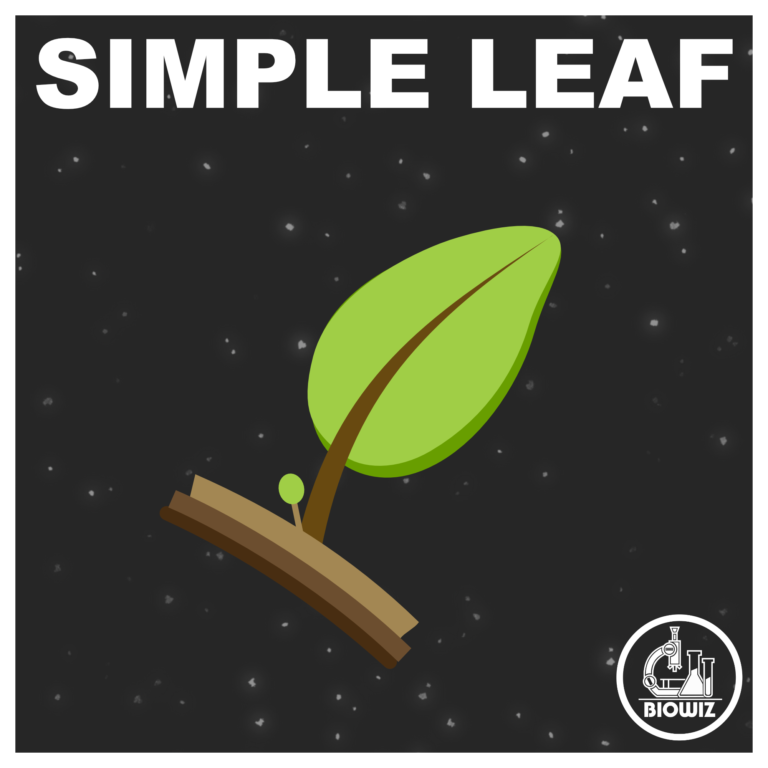
Simple leaf
- In a simple leaf, either the incisions are absent or, if present, they do not reach the midrib.
- An axillary bud is present at the axil of the petiole.
Compound leaf
- In a compound leaf, the incisions reach the midrib and the lamina is divided into a number of leaflets.
- An axillary bud is present at the axil of the petiole, but absent at the axil of the leaflets.
- Compound leaves are divided into two types on the basis of the arrangement of leaflets:
- Pinnately compound – a number of leaflets are present on a common axis called the rachis, which represents the midrib of the leaf.
- Palmately compound – the leaflets are attached at a common point, i.e. at the tip of the petiole.
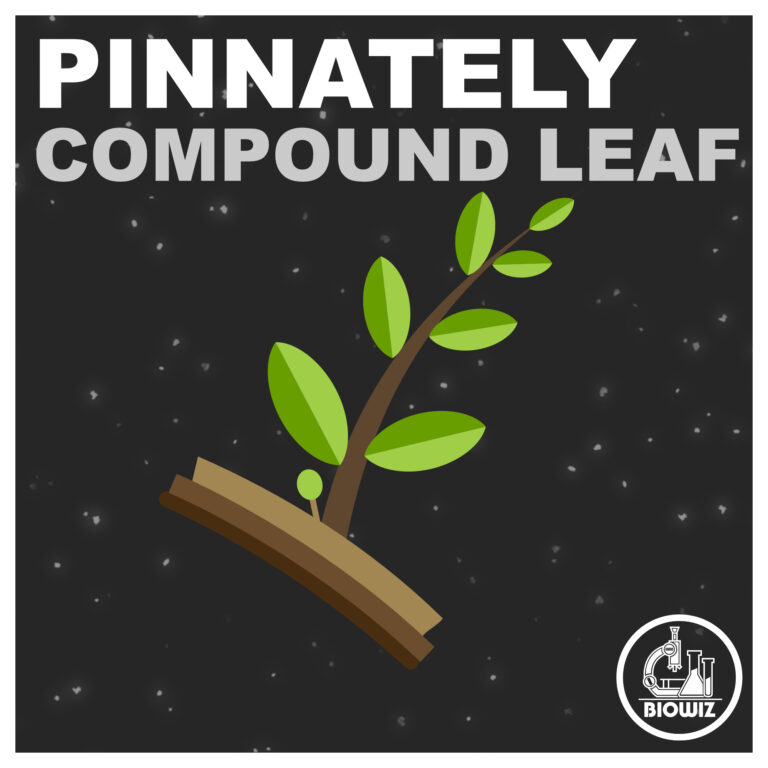
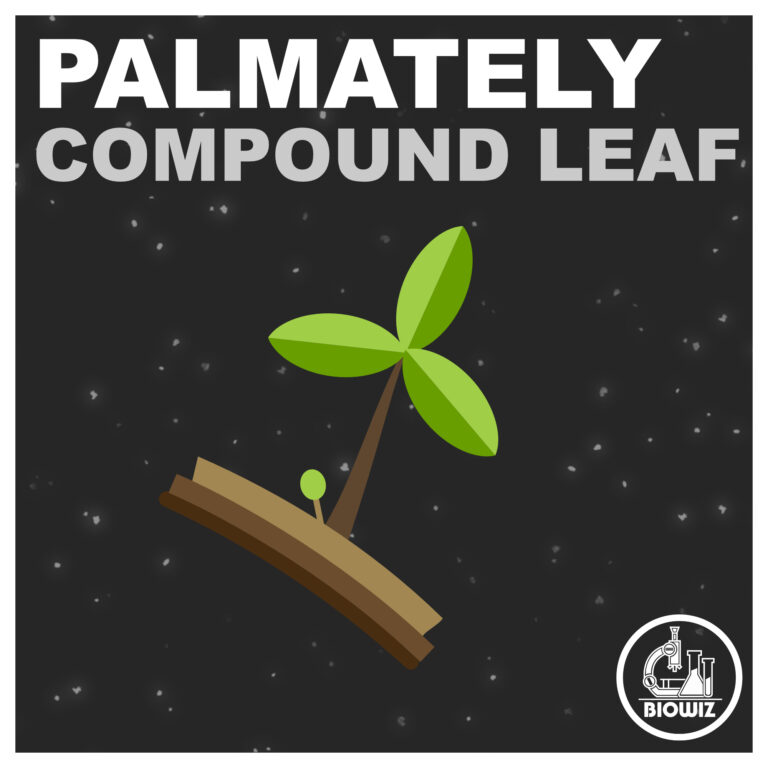
NCERT’s examples: neem has a pinnately compound leaf, and silk cotton has a palmately compound leaf.
Types of venation in leaves
The arrangement of veins and veinlets in the leaf blade is called venation. Venation can be divided into two types:
- Parallel venation
- Reticulate venation
Parallel venation
- Veins run parallel to each other within the lamina.
- Present mostly in monocots.
- Exception – dicot with parallel venation in leaves: Calophyllum.

Reticulate venation
- Veinlets form a criss-cross network in the lamina.
- Present in dicots.
- Exception – monocots with reticulate venation in leaves: Smilax, Dioscorea.
NCERT’s leaf modifications are frequently asked: tendrils for climbing (pea), spines for defence (cactus), fleshy leaves that store food (onion, garlic), phyllodes – a flattened, green petiole that does the leaf’s work (Australian Acacia) – and leaves modified to trap insects (pitcher plant, Venus flytrap).