
Reproduction in fungi
Reproduction in fungi can occur simply through body parts (vegetative reproduction), by the formation of haploid asexual spores (asexual reproduction), or by the formation of gametes and sexual spores (sexual reproduction).
Fungi produce several types of asexual spores. These spores are mostly haploid and are formed by mitotic divisions in the haploid body of the fungus. Thus, these spores are also called mitospores.
Examples of asexual spores of fungi:
- Zoospores
- Sporangiospores
- Conidiospores
- Oidia
- Chlamydospores
NCERT: vegetative reproduction in fungi takes place by fragmentation, fission and budding. Asexual reproduction is by spores called conidia, sporangiospores or zoospores, and sexual reproduction is by oospores, ascospores and basidiospores.
Types of asexual spores
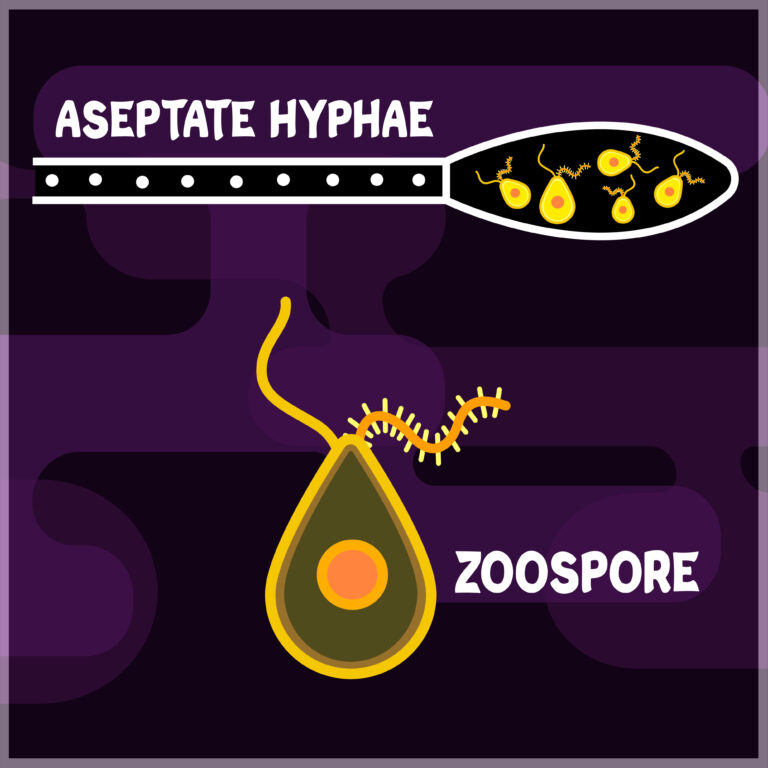
Zoospores
- Endogenous spores, i.e. formed inside a closed chamber called the zoosporangium.
- Motile spores, i.e. flagella are present.
- Formed under favourable conditions.
- Thin-walled spores.
- Present in members of the fungal class Oomycetes (Phycomycetes).
Sporangiospores
- Endogenous spores, i.e. formed inside a closed chamber called the sporangium.
- Non-motile spores, i.e. flagella are absent.
- Formed under favourable conditions.
- Thin-walled spores.
- Present in members of the fungal class Zygomycetes (Phycomycetes).
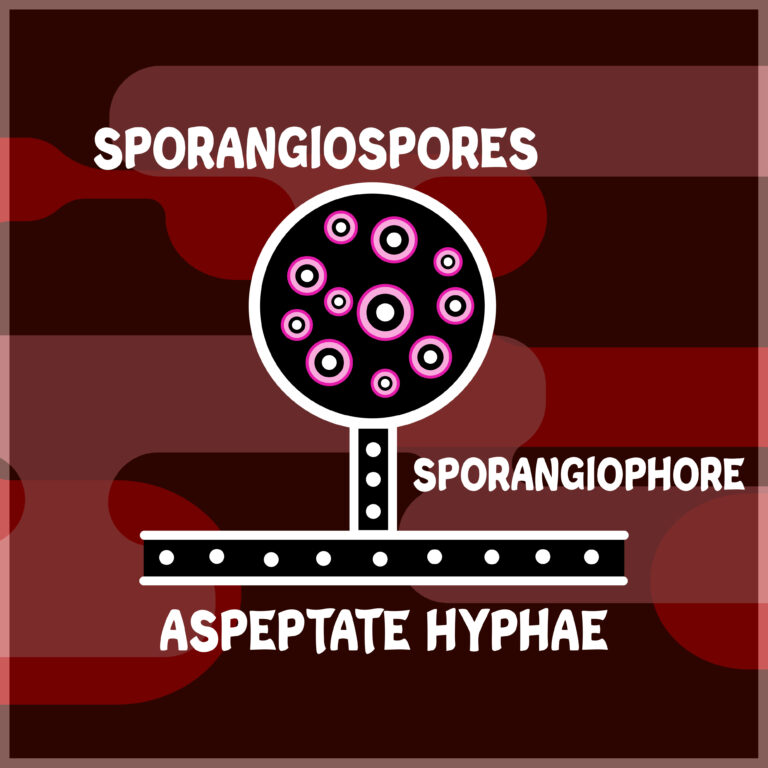
NCERT: in Phycomycetes (e.g. Mucor, Rhizopus, Albugo), asexual spores are produced endogenously in a sporangium. They are either motile zoospores or non-motile aplanospores.
Conidiospores/ conidia
- Exogenous spores, i.e. formed outside the body.
- Non-motile spores, i.e. flagella are absent.
- Formed under favourable conditions.
- Thin-walled spores.
- Present in members of the fungal class Ascomycetes.
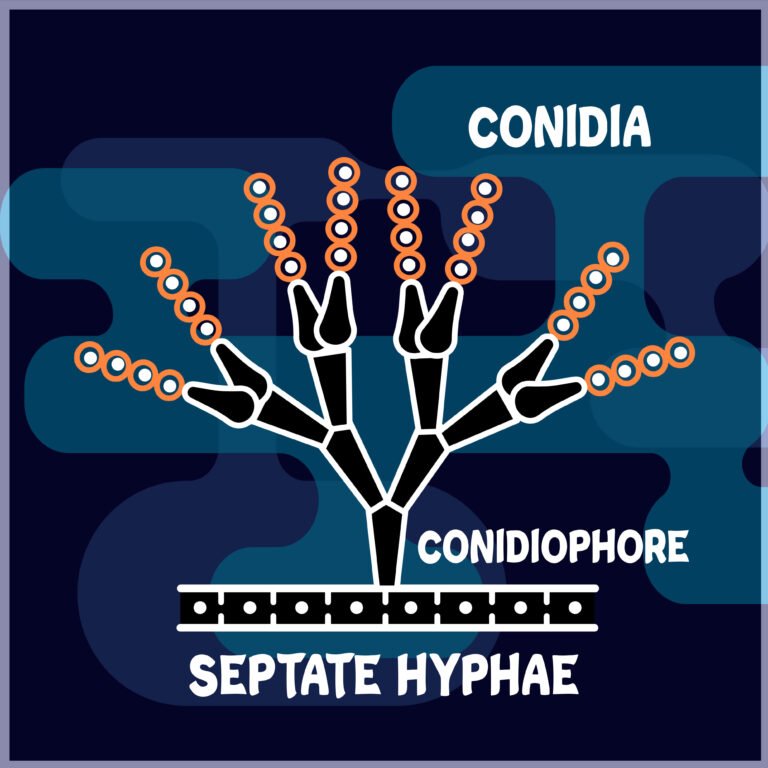
NCERT: in Ascomycetes, conidia are produced exogenously on special mycelia called conidiophores, and they germinate to form a new mycelium. Deuteromycetes (imperfect fungi) reproduce only by asexual spores, the conidia.
Oidia
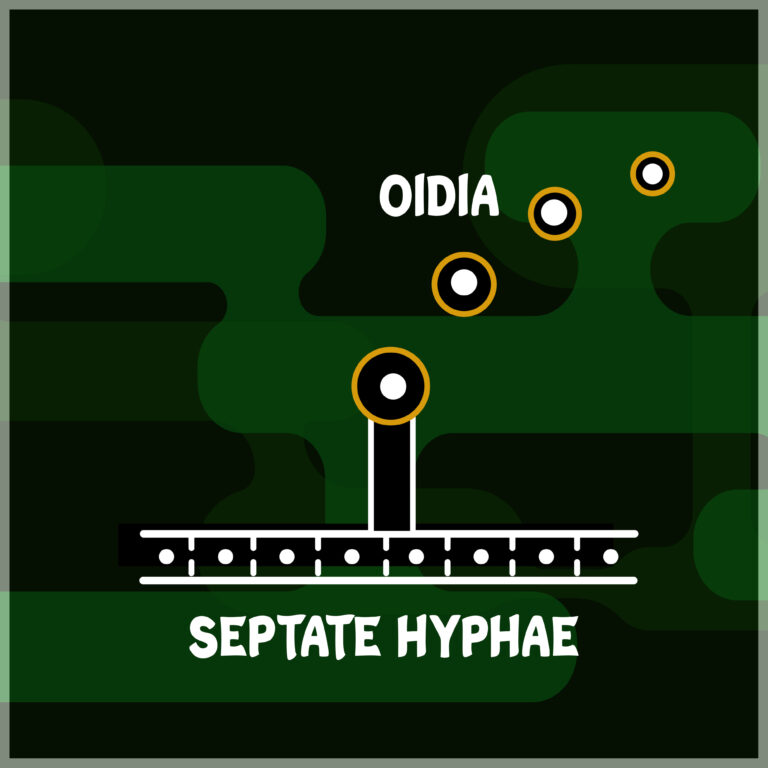
- Exogenous spores.
- Non-motile spores.
- Formed under highly favourable conditions (sugar solution).
- Thin-walled spores.
- Present in members of Zygomycetes (e.g. Rhizopus, Mucor), some Ascomycetes and some Basidiomycetes.
Chlamydospores
- Exogenous spores.
- Non-motile spores.
- Formed under unfavourable conditions.
- Thick-walled spores.
- Present in many fungi, e.g. Mucor, Fusarium.
Of all these spores, only chlamydospores are thick-walled and formed under unfavourable conditions, so they act as resting spores. Only zoospores are motile. In Basidiomycetes, NCERT notes that asexual spores are generally not found; vegetative reproduction is by fragmentation.