
Sclerenchyma is a simple permanent tissue made of thick-walled, lignified cells that gives mechanical support to the plant.
Features
- Usually made up of dead cells.
- Shape – either long and pointed (fibres) or spherical, oval or cylindrical (sclereids).
- Intercellular spaces are absent.
- The cell wall is hard and thick, with a deposition of lignin.
- The walls have numerous pits.
- Vacuole is absent.
- Nucleus is absent.
- Present in the seed coat of many plants.
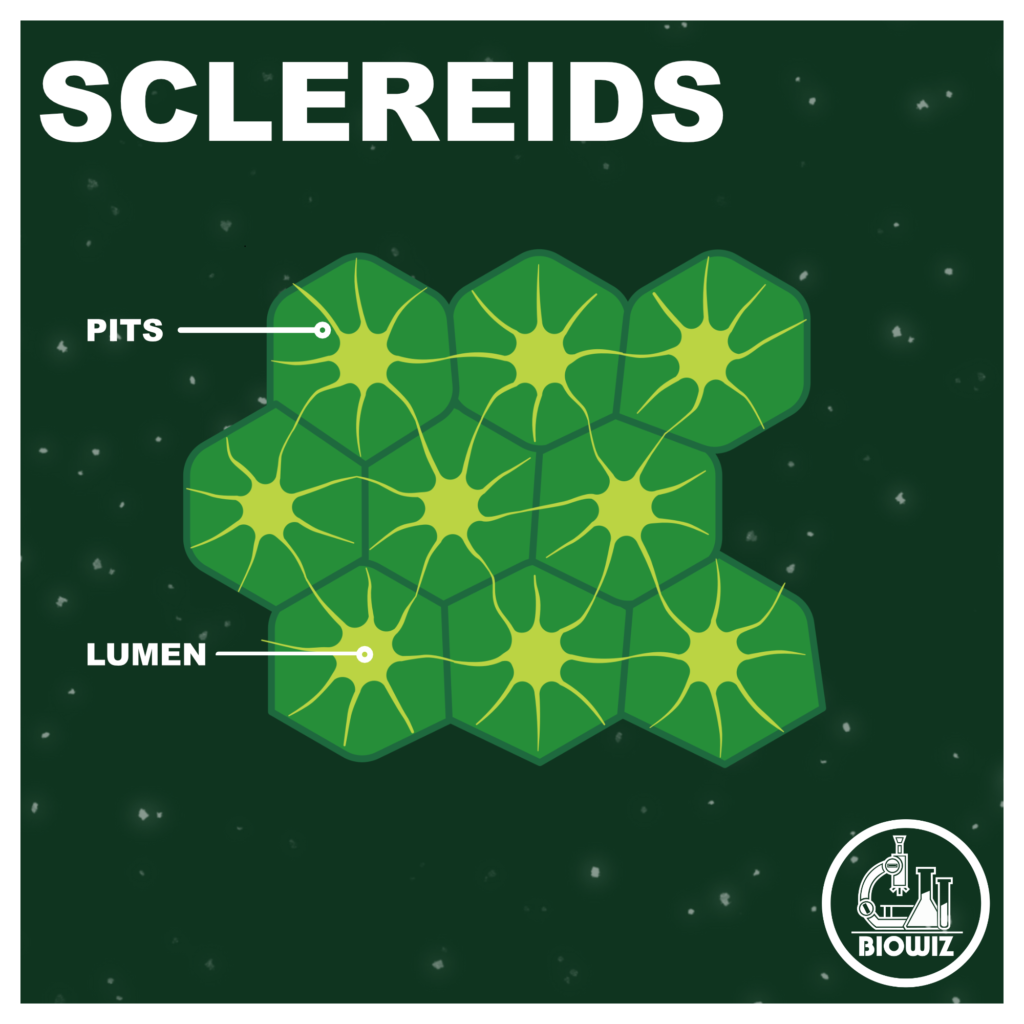
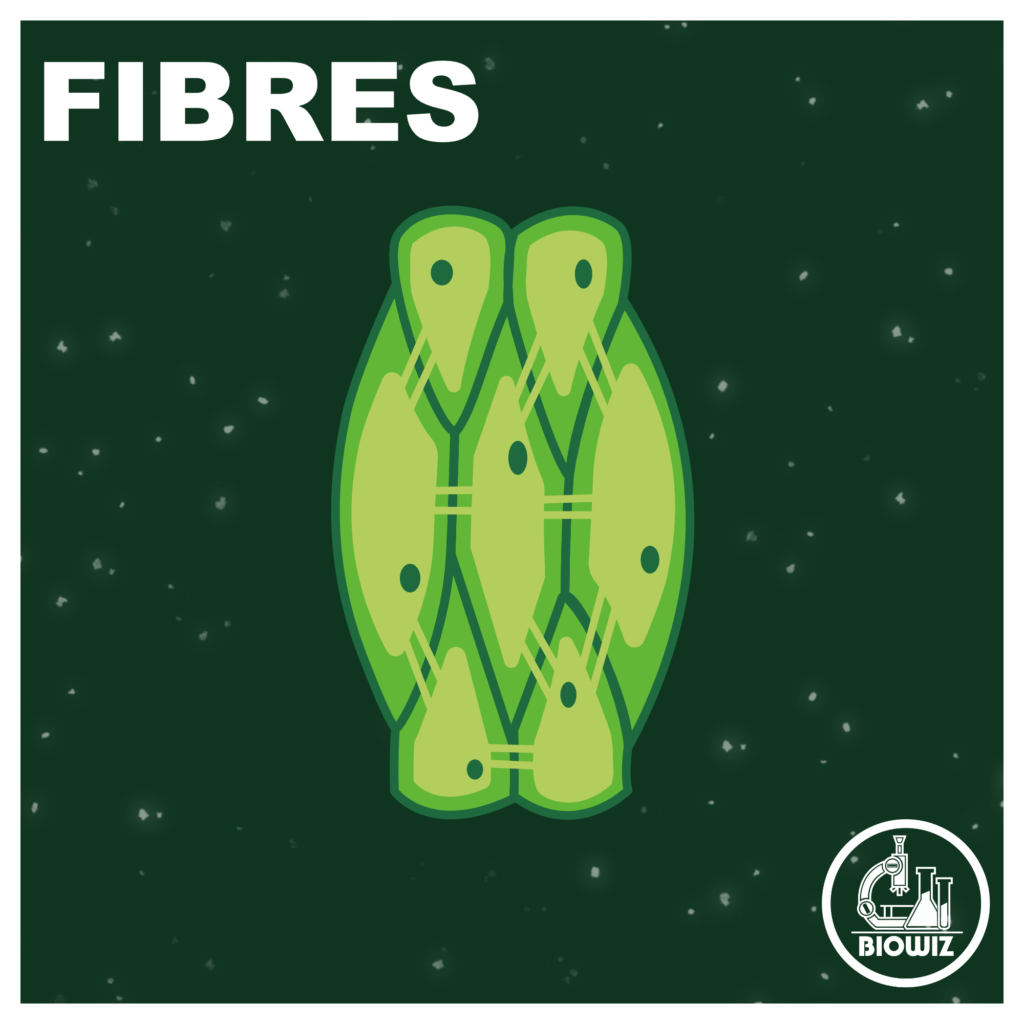
Sclereids are found in the fruit walls of nuts, the pulp of guava, pear and sapota, the seed coats of legumes and the leaves of tea. The gritty feel of pear and guava pulp comes from these sclereids (stone cells).
Functions
- Dead mechanical tissue.
- Provides mechanical strength to plant parts.
- Provides rigidity to leaves.
Compare the three simple tissues: parenchyma is living and thin-walled; collenchyma is living, with pectin thickening at the corners, and is absent in monocots; sclerenchyma is dead, with thick lignified walls.